'Cheever: a life' by Blake Bailey
'Updike' by Adam Begley
I kept coming back to this question when I thought about two biographies I have read recently on deceased authors John Updike and John Cheever. "Does a screwed up childhood make a author more interesting?"
Let me say upfront I've read almost all of John Cheever's short stories and the novel 'Falconer'. For Updike I've read his first Rabbit book, 'The Centaur", and a book with his collected short stories from his early years. Comparing the books and short stories together I prefer Cheever much more than anything Updike has produced.
Cheever's short stories and his novel "Falconer" have depth and sadness to them bordering on the sublime. Updike's short stories and novels are written well but they have an emptiness in them. Updike's work doesn't make me sit back and think like Cheever's work does. And after reading two biographies on both men you can see where everything differs except their names.
'Cheever: a life' thoroughly examines just how screwed up the Cheever family was. First off poor John was an unwanted kid, always in the shadow of his brother. In fact his relationship with his brother was a little bit strange. John had homosexual, incestuous feelings for his brother that he kept hidden for many years until he had a homosexual relationship with a younger man after he kicked alcohol (more on this later). And this is just a small slice of Cheever's life!
Cheever struggled all his life trying to create a novel. He was definitely a master at the short story and dominated The New Yorker's fiction department for many years. Cheever struggled though with novels. Even after the success of The 'Wapshot Chronicle', which is basically just one long short story, Cheever struggled with the novel. He could never produce novels at such a high rate like Updike.
Showing posts with label Book Club. Show all posts
April 22, 2014
March 6, 2014
Book Club: Showtime
One thing about Jeff Pearlman books, they always go after juicy topics. Whether it's on the early 90's Cowboys or the 86 Mets, Pearlman has never shied away from teams that like to do drugs or have sex with women or multiple women. All that being said I found his latest book 'Showtime: Magic, Kareem, Riley, and the Los Angeles Lakers Dynasty of the 80's' lacking.
Oh sure there are stories about Magic's orgies and Spencer Haywood's drug problems. The problem I had with this book if that I've heard all of these stories before. If you read Bill Simmons' basketball book you already knew about Spencer Haywood being kicked off the Lakers and then him almost hiring two hitmen to assassinate head coach Paul Westhead. You also knew about James Worthy being arrested for soliciting two prostitutes who happened to be undercover cops.
I've learned in life not to go into things with high expectations because most of the time you get crushed by disappointment. The end result didn't match this high standard you had set in you mind. I sadly didn't remember this rule going into this book. At the the end of the day 'Showtime' isn't a bad book but you will be disappointed in it if you've heard these stories before.
That's not to say I didn't enjoy the entire book. I did enjoy reading about Jerry Tarkanian almost became the Lakers coach in 1979. How Jack McKinney was the real father of "Showtime". How Paul Westhead ruined his career by installing an offense where everyone just stood around. How Pat Riley exited the Lakers because his ego was too much.
The stories of sex and women were probably the biggest disappointment. No stories about Jerry Buss making an airplane shake like Jerry Jones. No white house. No stories about maids cleaning up disgusting houses after drug orgies. Quite frankly the Lakers were boring compared to the early 90's Cowboys.
And the players that were eccentric like Kurt Rambis, Pearlman didn't go into a lot of detail giving us examples of his eccentricities like he did with a lot of those 86 Mets players. The problem here though, not Pearlman's fault, was that he was covering an entire decade instead of one season. He had to cover a lot of ground with those Lakers teams while the Mets were just a one-year wonder. You can get into more detail with one year teams.
My own expectations caused me to be lukewarm on this book. I shouldn't have expected it be as juicy as Perlman's Cowboys book. Now excuse me while I temper my expectations for Jonah Keri's upcoming book.
Oh sure there are stories about Magic's orgies and Spencer Haywood's drug problems. The problem I had with this book if that I've heard all of these stories before. If you read Bill Simmons' basketball book you already knew about Spencer Haywood being kicked off the Lakers and then him almost hiring two hitmen to assassinate head coach Paul Westhead. You also knew about James Worthy being arrested for soliciting two prostitutes who happened to be undercover cops.
I've learned in life not to go into things with high expectations because most of the time you get crushed by disappointment. The end result didn't match this high standard you had set in you mind. I sadly didn't remember this rule going into this book. At the the end of the day 'Showtime' isn't a bad book but you will be disappointed in it if you've heard these stories before.
That's not to say I didn't enjoy the entire book. I did enjoy reading about Jerry Tarkanian almost became the Lakers coach in 1979. How Jack McKinney was the real father of "Showtime". How Paul Westhead ruined his career by installing an offense where everyone just stood around. How Pat Riley exited the Lakers because his ego was too much.
The stories of sex and women were probably the biggest disappointment. No stories about Jerry Buss making an airplane shake like Jerry Jones. No white house. No stories about maids cleaning up disgusting houses after drug orgies. Quite frankly the Lakers were boring compared to the early 90's Cowboys.
And the players that were eccentric like Kurt Rambis, Pearlman didn't go into a lot of detail giving us examples of his eccentricities like he did with a lot of those 86 Mets players. The problem here though, not Pearlman's fault, was that he was covering an entire decade instead of one season. He had to cover a lot of ground with those Lakers teams while the Mets were just a one-year wonder. You can get into more detail with one year teams.
My own expectations caused me to be lukewarm on this book. I shouldn't have expected it be as juicy as Perlman's Cowboys book. Now excuse me while I temper my expectations for Jonah Keri's upcoming book.
February 27, 2014
Book Club: Development Hell
I've always been fascinated by the behind the scenes making of movies. Hell lot of people are or movie studios wouldn't add extras to their home movies. Some behind the scenes adventures I find more fascinating than the movie that was created. I've watched 'Heat of Darkness: A filmmaker's Apocalypse' more than I have watched 'Apocalypse Now'. It's a wonderful look at the long and destructive making of that movie.
Continuing my reading about behind the scenes making of movies, leaving off after yesterday's reading of Fiasco, I read 'Tales from Development Hell' by David Hughes.
It's amazing to me how much movie studios and TV production studios buy projects that they either neither develop or take a very long time to develop. Hundreds of scripts are bought each year, worked over through production, and then never see the light of day.
Movies alone in development hell have their own Wikipedia page. And that's just a small example. And to be honest those examples are more interesting than the examples Mr. Hughes uses in his book.
'Tales from Development Hell' left me feeling cold. Mr. Hughes either used examples that I knew were in development hell like the 4th Indiana Jones movies (which should have stayed in development hell) and the Lord of the Rings. And the examples he did use were known weren't all that interesting like the Richard Preston story about the Ebola breakout in Washington DC.
Continuing my reading about behind the scenes making of movies, leaving off after yesterday's reading of Fiasco, I read 'Tales from Development Hell' by David Hughes.
It's amazing to me how much movie studios and TV production studios buy projects that they either neither develop or take a very long time to develop. Hundreds of scripts are bought each year, worked over through production, and then never see the light of day.
Movies alone in development hell have their own Wikipedia page. And that's just a small example. And to be honest those examples are more interesting than the examples Mr. Hughes uses in his book.
'Tales from Development Hell' left me feeling cold. Mr. Hughes either used examples that I knew were in development hell like the 4th Indiana Jones movies (which should have stayed in development hell) and the Lord of the Rings. And the examples he did use were known weren't all that interesting like the Richard Preston story about the Ebola breakout in Washington DC.
February 26, 2014
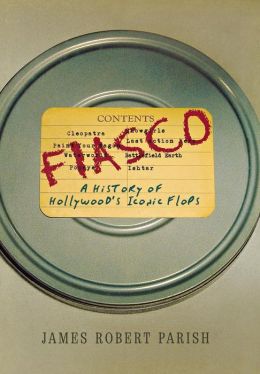
Fiasco
Fi-as-sco: a complete failure
What constitutes as a flop in Hollywood? Obviously it's lost money and not just a few million dollars but multi-million dollars have to be lost. What also makes a movie a flop? Bad script, worst acting, backstage turmoil, a actor's pet project? After reading James Robert Parish's book 'Fiasco: A History of Hollywood Iconic Flops' it's all of above.
Parish investigates exactly what makes a flop, the turmoil most of them are made under, how much money they lose, and why they flop. And they all have many different reasons for flopping but these seem like the main reason for many flops.
1. Many rewrites from the script
2. Cost overruns that don't just go past the estimate of the budget but blow past the estimate
3. Hubris and ego
There are of course many other different reasons for a movie flop. An example Parish presents is an actor's "dream project". John Travolta desperately wanted to make L. Ron Hubbard's books 'Battlefield Earth' into a movie without realizing that Hubbard's book was full of sci-fi ideas that were out of date. Well you know what happened next. 'Battlefield Earth' was made at a huge cost, despite looking very cheaply made on screen, and it bombed at the box office.
What constitutes as a flop in Hollywood? Obviously it's lost money and not just a few million dollars but multi-million dollars have to be lost. What also makes a movie a flop? Bad script, worst acting, backstage turmoil, a actor's pet project? After reading James Robert Parish's book 'Fiasco: A History of Hollywood Iconic Flops' it's all of above.
Parish investigates exactly what makes a flop, the turmoil most of them are made under, how much money they lose, and why they flop. And they all have many different reasons for flopping but these seem like the main reason for many flops.
1. Many rewrites from the script
2. Cost overruns that don't just go past the estimate of the budget but blow past the estimate
3. Hubris and ego
There are of course many other different reasons for a movie flop. An example Parish presents is an actor's "dream project". John Travolta desperately wanted to make L. Ron Hubbard's books 'Battlefield Earth' into a movie without realizing that Hubbard's book was full of sci-fi ideas that were out of date. Well you know what happened next. 'Battlefield Earth' was made at a huge cost, despite looking very cheaply made on screen, and it bombed at the box office.
February 20, 2014
Lost in Translation: Female Edition
I've talked in the past about my love of translated books. I've mostly read Latin America translations and Roberto Bolano books but I've finally broaden my reach. I'm starting to read books from European countries and I have a book from Iran on my Kindle.
I'm fascinated with translations because they give you a glance at other countries and whatever was happening in that country at a particular time the book is set in. Basically they're like history books. In this pursuit of translations I've been doing a lot of research on what is translated and from what language. In this research for translations I've been bookmarking these discoveries as "books I want". I got to thinking though, I really should share these discoveries. And after some discussion with Mac about it, I've decided to make a list of translated books. The first part will be the female edition of translations. I'll get to the men's side of translations for another time. Enjoy my list.
*Publishing houses that translate these works are: Melville House, New Directions, and Open Letter plus many more you can look up.
**Open Letter also runs a literary website called Three Percent and it's where I found out about most of these books. I do suggest going over their reviews of translations and the list of books that have been nominated for the Best Translated Book Award.
***I haven't read all of these books but I'll let you know which ones I have read. For the ones I haven't read I'll give you the reader's digest synopsis of the book.
Gigli & After Midnight by Irmgard Keun (German): Ms Kuen's story itself would be a wonderful book. She left Germany in 1940 with her Jewish boyfriend, faked her suicide, and returned to Germany while it was still under Nazi control. And that story is the basis for After Midnight which actually was one of the first non-Spanish translated books I've read.
Her other book which I just finished the other night is Gigli, a story about a girl in a factory who finds out some troubling news about her adoption. This book is tremendously good if you're a feminist or someone who's interested in a really good story.
With My Dog Eyes by Hilda Hilst (Brazil/Portuguese): This book hasn't been published yet but based on it's synopsis, it's an examination of mental health.
Nothing Serious by Justine Levy (French): This is another book about a real life experience. Justine Levy was married to a man who left her for model Carla Bruni. The same Bruni who is married to former French president Nicolas Sarkozy. This story is the basis of this wonderfully funny and cynical book.
I'm fascinated with translations because they give you a glance at other countries and whatever was happening in that country at a particular time the book is set in. Basically they're like history books. In this pursuit of translations I've been doing a lot of research on what is translated and from what language. In this research for translations I've been bookmarking these discoveries as "books I want". I got to thinking though, I really should share these discoveries. And after some discussion with Mac about it, I've decided to make a list of translated books. The first part will be the female edition of translations. I'll get to the men's side of translations for another time. Enjoy my list.
*Publishing houses that translate these works are: Melville House, New Directions, and Open Letter plus many more you can look up.
**Open Letter also runs a literary website called Three Percent and it's where I found out about most of these books. I do suggest going over their reviews of translations and the list of books that have been nominated for the Best Translated Book Award.
***I haven't read all of these books but I'll let you know which ones I have read. For the ones I haven't read I'll give you the reader's digest synopsis of the book.
Gigli & After Midnight by Irmgard Keun (German): Ms Kuen's story itself would be a wonderful book. She left Germany in 1940 with her Jewish boyfriend, faked her suicide, and returned to Germany while it was still under Nazi control. And that story is the basis for After Midnight which actually was one of the first non-Spanish translated books I've read.
Her other book which I just finished the other night is Gigli, a story about a girl in a factory who finds out some troubling news about her adoption. This book is tremendously good if you're a feminist or someone who's interested in a really good story.
With My Dog Eyes by Hilda Hilst (Brazil/Portuguese): This book hasn't been published yet but based on it's synopsis, it's an examination of mental health.
Nothing Serious by Justine Levy (French): This is another book about a real life experience. Justine Levy was married to a man who left her for model Carla Bruni. The same Bruni who is married to former French president Nicolas Sarkozy. This story is the basis of this wonderfully funny and cynical book.
February 18, 2014
Projections and Previews
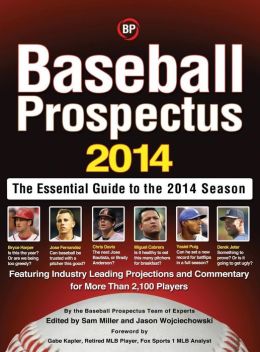
For the first time in my life I finally bought the Baseball Prospectus Preview/Projection book. I bought it, read it quickly, and then returned it on my Kindle for a refund because that's not the kind of book I like to keep around. We can talk about my buying books on Kindle and returning them policy another day, what I want to talk about is previews/projections.
For the first time in their history Baseball Prospectus added byline's in their preview sections while also letting outside writers write a few of those previews. Now once again this was the first book of their's I've bought, but I've been told the bylines and previews makes this one of the better Prospectus books in a while. And I completely agree with that point.
The preview section for each team is why I bought the book. The previews were a fantastic combination of statistical insight and history of each team and how they got to this specific point. The Orioles segment for example was a terrific insight into how this Orioles team was put together, Dan Duquette's positives and negatives, and how the Orioles have scouted overseas. kt1000 would know all the details already but for someone like myself it was wonderful insight.
And that too me is where Baseball Prospectus stands apart from other preview magazines like Lindy's or Athlon. Those magazine's give you the bare bones preview. A quick glimpse of the team heading into spring training. Baseball Prospectus is trying to give you a preview of how a team arrived at this point before spring training and for that reason I would buy this book.
For the first time in their history Baseball Prospectus added byline's in their preview sections while also letting outside writers write a few of those previews. Now once again this was the first book of their's I've bought, but I've been told the bylines and previews makes this one of the better Prospectus books in a while. And I completely agree with that point.
The preview section for each team is why I bought the book. The previews were a fantastic combination of statistical insight and history of each team and how they got to this specific point. The Orioles segment for example was a terrific insight into how this Orioles team was put together, Dan Duquette's positives and negatives, and how the Orioles have scouted overseas. kt1000 would know all the details already but for someone like myself it was wonderful insight.
And that too me is where Baseball Prospectus stands apart from other preview magazines like Lindy's or Athlon. Those magazine's give you the bare bones preview. A quick glimpse of the team heading into spring training. Baseball Prospectus is trying to give you a preview of how a team arrived at this point before spring training and for that reason I would buy this book.
January 8, 2014
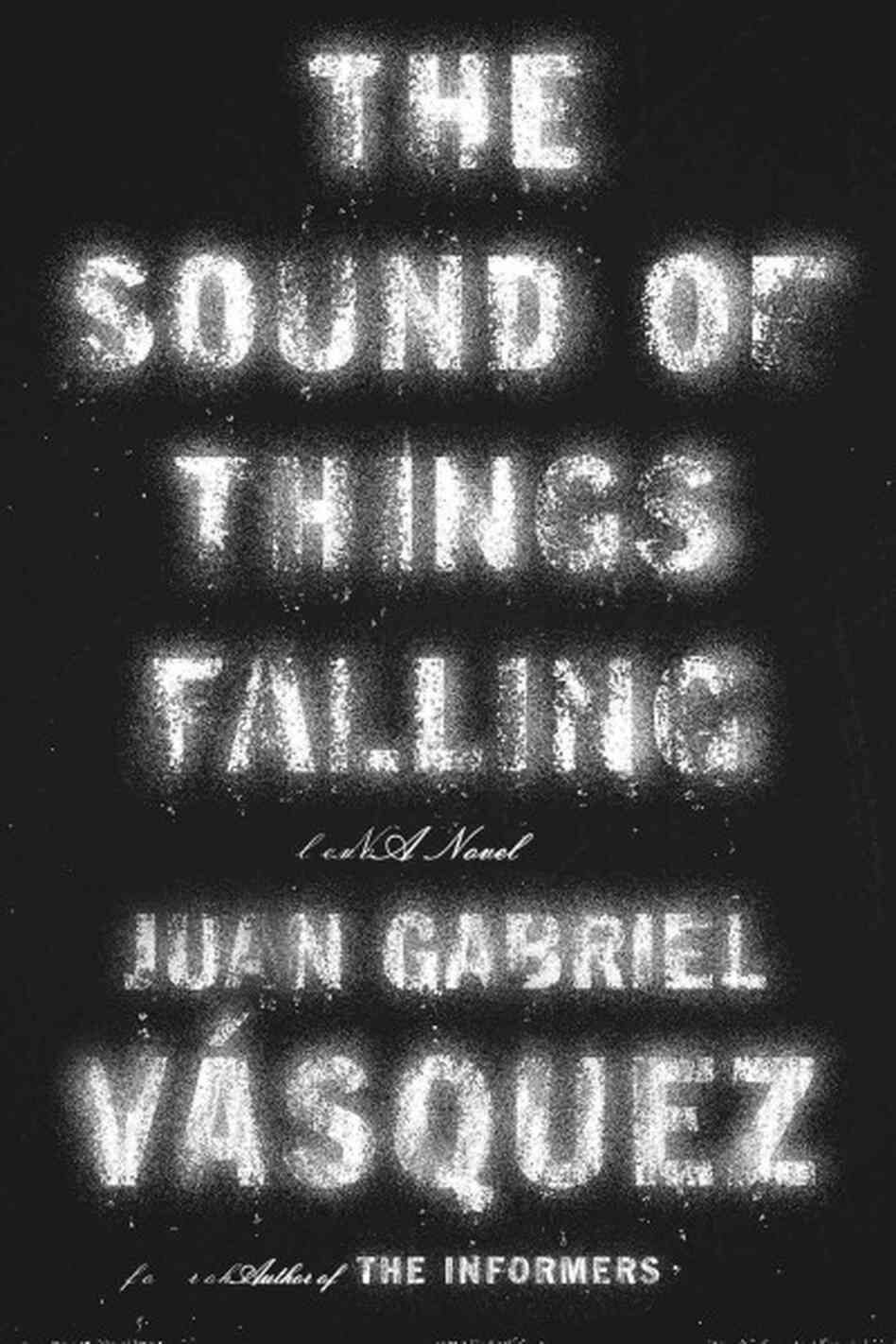
Book Club: The Sound of Things Falling
Latin America literature falls in two categories. The magical realism that made Gabriel Garcia Marquez famous and the novels with a twinge of historical fiction. Roberto Bolano is really in his own category regarding Latin American fiction. I read the more historical fiction novels because quite frankly I just can't stand magical realism.
Latin American novels with a historical backgrounds are some of the most fascinating books to me because I'm fascinated with the history of Latin American. Latin America of the Cold War era was ruled by dictators, drug lords, and military junta's. Read Tim Weiner's "Legacy of Ashes" and you'll see every few pages or so the CIA being involved in this assassination or that coup in a different Latin American country. And for some sick reason I find this history fascinating*.
*I should probably get help, right?
Now historical fiction in Latin American falls into two category's. There are the true historical fiction books involving the old dictators like Tomas Martinez's novel "Peron" and Mario Vargas Llosa's "The Feast of the Goat". And now we're seeing the new Latin American historical fiction involving memory of the dictator days like Juan Gabriel Vasquez's book "The Sound of Things Falling".
The novel surrounds Antonio's painful memories. The newly married and father Antonio is a professor of law in Bogota, Colombia. He goes to a pool hall where he meets a man named Richardo Laverde who tells Antonio his past as a pilot, his release from prison, and the death of his wife in a plane crash. And that's when things start falling apart for Antonio.
December 6, 2013
Book Club: Year in Reading
Over at The Millions they're doing their annual year in reading asking authors what they have read the past year. Since books are a big part of my life I've decided to go over some of the books I've read this year as well. And after looking back at some of the reviews I posted this year, I've decided I shouldn't review a book until sleeping on it for a few days or even weeks because damn did I miss on Thomas Pynchon's new book 'Bleeding Edge' because after thinking about it I enjoyed that book much more than my original review. Oh well here are the books I've read and some of them I even reviewed. Enjoy.
Well let's start with Thomas Pynchon's book 'Bleeding Edge' (my review) which at first I didn't enjoy as much as I should have. After thinking about it some more I in fact did enjoy this book about the dot com bubble in New York pre-9/11 and the detective story that revolves around these events. Sticking with Pynchon I re-read 'The Crying of Lot 49' this year. The original paranoid satire by Pynchon still holds up strongly in my view. And finally I haven't finished it yet, but I've started reading 'Against the Day' Pynchon's massive book that he published a few years ago. I've enjoyed it so far.
November 20, 2013
Late to the Party
I'm always late to the party when it comes to technology. I was probably one of the last people to buy an iPod. One of the last people to ditch the flip phone. One of the last people to sign up for Facebook. (I can proudly say I was early to the Twitter experience.) And now I'm one of the last people to own a Kindle.
I was a luddite when it came to devices to read books. I didn't want anything to do with them. Give me the physical book and leave me the hell alone. My reasoning to this thought process is that I've never liked screens to stare at while reading a book or long magazine piece. Screen's on a Kindle or iPad have always hurt my eyes or so I thought and that's why I never wanted a electronic device to read stuff.
I have to say after receiving my Kindle (it was a prize from work) and after reading a couple of books on it (I'll get there) I love this device. Yes Kris, I love this device. I love that I can read big books on it (like The Recognitions), I love that I can buy a book right in my home to read instead of waiting until a bookstore is open.
One of my complaints though and Amazon is the place to blame for this is that Kindle books are expensive compared to used books on Amazon. You can buy quite a few books on Amazon that are used dirt cheap along with $3.99 shipping. Most Kindle books cost you around $8.99 to $11.99. I know I shouldn't be complaining about prices but it's something to think about.
I'll still buy regular books going forward, but I'm definitely going to buy more and more Kindle books.
I was a luddite when it came to devices to read books. I didn't want anything to do with them. Give me the physical book and leave me the hell alone. My reasoning to this thought process is that I've never liked screens to stare at while reading a book or long magazine piece. Screen's on a Kindle or iPad have always hurt my eyes or so I thought and that's why I never wanted a electronic device to read stuff.
I have to say after receiving my Kindle (it was a prize from work) and after reading a couple of books on it (I'll get there) I love this device. Yes Kris, I love this device. I love that I can read big books on it (like The Recognitions), I love that I can buy a book right in my home to read instead of waiting until a bookstore is open.
One of my complaints though and Amazon is the place to blame for this is that Kindle books are expensive compared to used books on Amazon. You can buy quite a few books on Amazon that are used dirt cheap along with $3.99 shipping. Most Kindle books cost you around $8.99 to $11.99. I know I shouldn't be complaining about prices but it's something to think about.
I'll still buy regular books going forward, but I'm definitely going to buy more and more Kindle books.
October 15, 2013
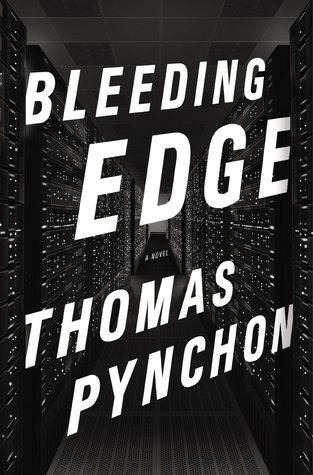
Book Club: Bleeding Edge
I'm not going to do a standard review of Thomas Pynchon's newest book 'Bleeding Edge'. If you want a plot synopsis of it you can find them scattered across the Internet with a Google search. What I am going to do is give some assorted thoughts on Pynchon's new book.
1. First off I'm going to say I didn't love this book the way I thought I would but it was still a very good book. I do recommend reading it, along with other books I've reviewed, to form your own opinion.
2. I guess my biggest problem with 'Bleeding Edge' is that it feels like a bunch of different authors books rolled into one. You have typical Pynchon paranoia and conspiracy but you also have Elmore Leonard's heroine (MAXINE TARNOW IS A BADASS WOMAN WHO CARRIES A GUN!) Tom Wolfe-Bonfires of the Vanity style parties, and Phillip Roth's Jewishness premeditating throughout the entire novel. It's like a novel version of a fruitcake. Some of it works, some of it doesn't.
3. Definitely Pynchon's most straightforward novel and possibly his easiest novel I've read (I haven't read Inherent Vice so I can't comment on that book). He doesn't get too cute with language or stories about alien abduction or attacks by octopuses.
4. Tell you a little about myself, I was born in 1988 and didn't really begin to have a taste in music, TV, or movies until really 1998 (which was an awful period for music really).
1. First off I'm going to say I didn't love this book the way I thought I would but it was still a very good book. I do recommend reading it, along with other books I've reviewed, to form your own opinion.
2. I guess my biggest problem with 'Bleeding Edge' is that it feels like a bunch of different authors books rolled into one. You have typical Pynchon paranoia and conspiracy but you also have Elmore Leonard's heroine (MAXINE TARNOW IS A BADASS WOMAN WHO CARRIES A GUN!) Tom Wolfe-Bonfires of the Vanity style parties, and Phillip Roth's Jewishness premeditating throughout the entire novel. It's like a novel version of a fruitcake. Some of it works, some of it doesn't.
3. Definitely Pynchon's most straightforward novel and possibly his easiest novel I've read (I haven't read Inherent Vice so I can't comment on that book). He doesn't get too cute with language or stories about alien abduction or attacks by octopuses.
4. Tell you a little about myself, I was born in 1988 and didn't really begin to have a taste in music, TV, or movies until really 1998 (which was an awful period for music really).
August 13, 2013
Book Club: DFW Bio
'Every Love Story Is a Ghost Story' by D.T. Max
My one complaint about biography's are that they are too long. 400 to 500 page behemoth's detailing every little moment of someone's life. Biographies on politicians are even worse because sometimes they go multiple volumes. 'Every Love Story Is a Ghost Story' suffers from the opposite approach. It's too short.
'Every Love Story Is a Ghost Story' is D.T. Max's biography on author David Foster Wallace is a very good book but it actually needed about 20 more pages to make it a great book.
A little backstory on David Foster Wallace. DFW was the author probably more remembered for his very long book 'Infinite Jest' along with a three short story collections and two books of essays. He committed suicide in 2008 and his unfinished novel 'The Pale King' was released a couple of years ago.
So back to 'Every Love Story is a Ghost Story'. DFW was born on the east coast but lived most of his life in Urbana, Illinois. DFW's father was a teacher at Illinois in philosophy. Both of his parents were academics who favored free thinking over love and emotion. Basically he was raised by a couple of Spocks. And this is where DFW's problems with depression began.
One of the lessons I learned from this book is that kids need love. They need to be hugged and asked if they're alright and listened to. They don't need to just sit in their room and "try to figure things out on their own" like DFW's parents would do with him.
Because of how he was raised DFW suffered from periods of depression and addiction from his early college days at Amherst for basically the next 10 years of his life. In that time DFW published his first novel 'The Broom of the System' and the short story collection 'Girl with Curious Hair'.
My one complaint about biography's are that they are too long. 400 to 500 page behemoth's detailing every little moment of someone's life. Biographies on politicians are even worse because sometimes they go multiple volumes. 'Every Love Story Is a Ghost Story' suffers from the opposite approach. It's too short.
'Every Love Story Is a Ghost Story' is D.T. Max's biography on author David Foster Wallace is a very good book but it actually needed about 20 more pages to make it a great book.
A little backstory on David Foster Wallace. DFW was the author probably more remembered for his very long book 'Infinite Jest' along with a three short story collections and two books of essays. He committed suicide in 2008 and his unfinished novel 'The Pale King' was released a couple of years ago.
So back to 'Every Love Story is a Ghost Story'. DFW was born on the east coast but lived most of his life in Urbana, Illinois. DFW's father was a teacher at Illinois in philosophy. Both of his parents were academics who favored free thinking over love and emotion. Basically he was raised by a couple of Spocks. And this is where DFW's problems with depression began.
One of the lessons I learned from this book is that kids need love. They need to be hugged and asked if they're alright and listened to. They don't need to just sit in their room and "try to figure things out on their own" like DFW's parents would do with him.
Because of how he was raised DFW suffered from periods of depression and addiction from his early college days at Amherst for basically the next 10 years of his life. In that time DFW published his first novel 'The Broom of the System' and the short story collection 'Girl with Curious Hair'.
August 6, 2013
Book Club: Bleeding Edge News
Back in February I gave you the news that Thomas Pynchon was releasing a new book on the "lull period between the dot com collapse and the terrible events of 9/11" called the 'Bleeding Edge'. Well now that we're basically a month away from the release of this book more details are starting to emerge on Pynchon's new novel. (Note: These details are from Amazon so they could be incorrect but I trust Amazon details enough to post them here.)
1. The release date will be 9/17/2013. The third week in September.
2. You're not going to get some 800 page behemoth. According to Amazon, Pynchon's new book clocks in at 496 pages. While not his shortest novel, it's certainly not his longest either which I'm not sure if it's a good thing or bad?
3. According to Amazon the book is a thriller, suspense, mystery book which I have to say really intrigues me now. After I write this post I might pre-order the book on Amazon.
4. Once again from Amazon here's the plot synopsis that I'm sure will be on the books dust jacket:
I love the last line. Reminds me of the movie 'Starship Troopers' when they show those news programs on the bug war and they end each segment with "Want to know more?"
As for this hypnosis? It sounds like a mix of Pynchon elements mixed with a Elmore Leonard heroine. I actually can't wait to see how a blogger is portrayed in Pynchon's world. Just the fact that bloggers are mentioned has sealed the fate that I will buy this book.
As whether this book will be good or not? That's what we'll have to find out. Lot of synopsis make books sound like they're the greatest thing ever (which is the point of plot synopsis on the dust jackets and backs of books) but once you actually start reading you can be surprised. I hope Pynchon surprises me with this book. As I said back in February, I found Pynchon's last two books 'Against the Day' and 'Inherent Vice' to be disappointments. I hope 'Bleeding Edge' is more 'Mason & Dixon' than 'Against the Day'.
1. The release date will be 9/17/2013. The third week in September.
2. You're not going to get some 800 page behemoth. According to Amazon, Pynchon's new book clocks in at 496 pages. While not his shortest novel, it's certainly not his longest either which I'm not sure if it's a good thing or bad?
3. According to Amazon the book is a thriller, suspense, mystery book which I have to say really intrigues me now. After I write this post I might pre-order the book on Amazon.
4. Once again from Amazon here's the plot synopsis that I'm sure will be on the books dust jacket:
"It is 2001 in New York City, in the lull between the collapse of the dot-com boom and the terrible events of September 11th. Silicon Alley is a ghost town, Web 1.0 is having adolescent angst, Google has yet to IPO, Microsoft is still considered the Evil Empire. There may not be quite as much money around as there was at the height of the tech bubble, but there’s no shortage of swindlers looking to grab a piece of what’s left.
Maxine Tarnow is running a nice little fraud investigation business on the Upper West Side, chasing down different kinds of small-scale con artists. She used to be legally certified but her license got pulled a while back, which has actually turned out to be a blessing because now she can follow her own code of ethics—carry a Beretta, do business with sleazebags, hack into people’s bank accounts—without having too much guilt about any of it. Otherwise, just your average working mom—two boys in elementary school, an off-and-on situation with her sort of semi-ex-husband Horst, life as normal as it ever gets in the neighborhood—till Maxine starts looking into the finances of a computer-security firm and its billionaire geek CEO, whereupon things begin rapidly to jam onto the subway and head downtown. She soon finds herself mixed up with a drug runner in an art deco motorboat, a professional nose obsessed with Hitler’s aftershave, a neoliberal enforcer with footwear issues, plus elements of the Russian mob and various bloggers, hackers, code monkeys, and entrepreneurs, some of whom begin to show up mysteriously dead. Foul play, of course.
With occasional excursions into the DeepWeb and out to Long Island, Thomas Pynchon, channeling his inner Jewish mother, brings us a historical romance of New York in the early days of the internet, not that distant in calendar time but galactically remote from where we’ve journeyed to since.
Will perpetrators be revealed, forget about brought to justice? Will Maxine have to take the handgun out of her purse? Will she and Horst get back together? Will Jerry Seinfeld make an unscheduled guest appearance? Will accounts secular and karmic be brought into balance?
Hey. Who wants to know?"
I love the last line. Reminds me of the movie 'Starship Troopers' when they show those news programs on the bug war and they end each segment with "Want to know more?"
As for this hypnosis? It sounds like a mix of Pynchon elements mixed with a Elmore Leonard heroine. I actually can't wait to see how a blogger is portrayed in Pynchon's world. Just the fact that bloggers are mentioned has sealed the fate that I will buy this book.
As whether this book will be good or not? That's what we'll have to find out. Lot of synopsis make books sound like they're the greatest thing ever (which is the point of plot synopsis on the dust jackets and backs of books) but once you actually start reading you can be surprised. I hope Pynchon surprises me with this book. As I said back in February, I found Pynchon's last two books 'Against the Day' and 'Inherent Vice' to be disappointments. I hope 'Bleeding Edge' is more 'Mason & Dixon' than 'Against the Day'.
July 25, 2013
Book Club: Klosterman & The Thin Red Line
(I'm still out of sorts trying to catch up what happened while I was gone along with the upcoming trade deadline and biogenesis cases. I'll catch up tomorrow in my week in baseball post. So for now I'm going to talk about a couple of books that I read during my trip.)
I Wear the Black Hat: Grappling with Villains (Real and Imagined) by Chuck Klosterman
Chuck Klosterman has turned into one of those writers where you either love his work or you can't stand him. I'm not sure when opinion on him turned like this? Is it because of his association with Bill Simmons? Is it because he's a pop culture essayist? Is it because he's so neutral in his writing*? It's the ginger beard isn't it? Or is it because he can compare two different subjects/people in very convoluted ways?
*I've always believed this is the biggest hangup with Klosterman for people. He doesn't have a specific team he roots for in any sport. He doesn't take a liberal or conservative standpoint. I love him for this reason but I understand why this reason drives people nuts.
The last example is my main guess why people either love or hate Klosterman. In Klosterman's last essay book 'Eating the Dinosaur' he compared Kurt Cobain of Nirvana to David Koresh of the Branch Dividians. I won't go into what the whole essay was about because quite frankly it was such an unmemorable essay that I frankly don't remember what it was about. And it's those kind of essays that I believe drive people nuts about Klosterman. For me I find Klosterman interesting even if I find his essays completely convoluted and that's why I bought his latest essay book 'I Wear the Black Hat: Grappling With Villains (Real and Imagined)'.
I have to say this latest book by Klosterman is just one big convoluted mess. At least with Klosterman's other books there are single essays or stories that can take your mind off a Koresh/Cobain comparison. This book there are no such breaks.
I Wear the Black Hat: Grappling with Villains (Real and Imagined) by Chuck Klosterman
Chuck Klosterman has turned into one of those writers where you either love his work or you can't stand him. I'm not sure when opinion on him turned like this? Is it because of his association with Bill Simmons? Is it because he's a pop culture essayist? Is it because he's so neutral in his writing*? It's the ginger beard isn't it? Or is it because he can compare two different subjects/people in very convoluted ways?
*I've always believed this is the biggest hangup with Klosterman for people. He doesn't have a specific team he roots for in any sport. He doesn't take a liberal or conservative standpoint. I love him for this reason but I understand why this reason drives people nuts.
The last example is my main guess why people either love or hate Klosterman. In Klosterman's last essay book 'Eating the Dinosaur' he compared Kurt Cobain of Nirvana to David Koresh of the Branch Dividians. I won't go into what the whole essay was about because quite frankly it was such an unmemorable essay that I frankly don't remember what it was about. And it's those kind of essays that I believe drive people nuts about Klosterman. For me I find Klosterman interesting even if I find his essays completely convoluted and that's why I bought his latest essay book 'I Wear the Black Hat: Grappling With Villains (Real and Imagined)'.
I have to say this latest book by Klosterman is just one big convoluted mess. At least with Klosterman's other books there are single essays or stories that can take your mind off a Koresh/Cobain comparison. This book there are no such breaks.
July 23, 2013
More Summer Book Club
Normally, this is where you get Talkin’ Baseball, but since
Keith is still on vacation (and only really talks baseball with The Colonel, and no I do not know the secret club handshake) you get me for one more day. But if you're here for sports, the big stories in baseball right now are: the Ryan Braun PED suspension, Matt Garza got traded deep in the heart of Texas, the Rays can't lose, and the Natinals are imploding.
Earlier this summer, Keith gave you some good choices for summer reading. However, he picked all fiction. So, I'm going to give you a couple of picks for interesting summer nonfiction.

Gettysburg: The Last Invasion by Allen Guelzo: This summer marks the 150th anniversary of the battle of Gettysburg and this book is the best story of the battle I've ever read (and I've read most of the ones published in the last 60 years or so). Guelzo does a great job with both the strategic and tactical decisions of both armies and their commanders; big as well as small. He takes you inside the terrain and the seemingly small choices undertaken by desperate soldiers that ended up having massive impact on the battle, and ultimately, history, as well the limitations of war technology in that era. But what sets this book apart is the depth in which Guelzo reveals the simmering resentments and political division in both the Confederate Army; and especially in the Union Army, whose generals were hopelessly divided between radical Republicans and those who not only hated Lincoln, but wanted some kind of restoration of the pre-war United States. This book is full of long forgotten details and is a must read if you are a Civil War devotee, or someone who has spent many, many hours hiking over the hallowed fields of Southern Pennsylvania.
These are just two of the many good nonfiction books available this summer.
Follow @kt1000 on Twitter.
July 2, 2013
Book Club: Top Books
Not much going on in sports today unless you're interested in Dwight Howard's free agency meetings and I'm not. Instead let's talk about books. Specifically let's talk about my personal top books. It's summer which means it's time to go outside and read by the pool, river, lake, or beach. Here's a selection of books I suggest reading.
Fiction
'Train Dreams' by Denis Johnson (My Review): This novella should have won the Pulitzer last year. 'Train Dreams' is a short meditation on the west before civilization arrived en masse.
'2666' by Roberto Bolano (My Review): Hard to explain this book in a short excerpt. Just read it though because you won't be disappointed.
'Absalom, Absalom!' by William Faulkner (My Review): Hard to find any white person today that could write about the south and race as well as Faulkner could. This book is about the ruthless rise of Thomas Supten and his eventual downfall.
'For Whom the Bell Tolls' by Ernest Hemingway (My Review): Hemingway's look at the Spanish Civil War is both brutal and beautiful. The way Hemingway writes this book can be goofy at time (Hemingway translates the Spanish in this book to make it look like Shakespeare wrote it. There are a lot of "Thy's' in there) but that shouldn't stop you from reading it.
'As I Lay Dying' by William Faulkner: If I ranked these books 'As I Lay Dying' would be my second pick. Faulkner takes the family drama to an extreme when a family tries to bury their wife and mother. If you think you're family can be selfish, read this book and reconsider your opinion.
Fiction
'Train Dreams' by Denis Johnson (My Review): This novella should have won the Pulitzer last year. 'Train Dreams' is a short meditation on the west before civilization arrived en masse.
'2666' by Roberto Bolano (My Review): Hard to explain this book in a short excerpt. Just read it though because you won't be disappointed.
'Absalom, Absalom!' by William Faulkner (My Review): Hard to find any white person today that could write about the south and race as well as Faulkner could. This book is about the ruthless rise of Thomas Supten and his eventual downfall.
'For Whom the Bell Tolls' by Ernest Hemingway (My Review): Hemingway's look at the Spanish Civil War is both brutal and beautiful. The way Hemingway writes this book can be goofy at time (Hemingway translates the Spanish in this book to make it look like Shakespeare wrote it. There are a lot of "Thy's' in there) but that shouldn't stop you from reading it.
'As I Lay Dying' by William Faulkner: If I ranked these books 'As I Lay Dying' would be my second pick. Faulkner takes the family drama to an extreme when a family tries to bury their wife and mother. If you think you're family can be selfish, read this book and reconsider your opinion.
April 4, 2013
Book Club: Train Dreams & Novellas
While I was reading Denis Johnson's Train Dreams I wondered to myself why we don't see more novellas published anymore? Some of the most famous books have been novellas: The Old Man and the Sea, Heart of Darkness, The Strange Case of Dr. Jekyll and Mr. Hyde, etc. These are all great books but you don't hardly see the novella form published anymore. All I can figure is that publishing houses don't want to risk publishing little short novels in today's publishing world and that's a shame.
I digress though. If you remember the last Denis Johnson book I read was Tree of Smoke which I had to stop reading because I found that book to be completely uninteresting. I have the opposite opinion on Johnson's book Train Dreams.
Train Dreams is a perfect little 116 page novella that is a pure pleasure to read. It takes us through the life of Robert Grainier a loner of a man who lives in the Idaho panhandle working clearing trees for the railroads. The book takes us through his life as an orphan to the tragedy revolving his family to his fight to keep his peace of mind living alone while also helping others.
It's a tremendous little book that I sincerely recommend reading. It's filled with vivid imagery, sorrow, humor, and triumph. Great read.
And this brings me back to the world of novellas. Novellas in my opinion are the perfect books. They're long enough to completely flesh out a story and yet short enough that a writer can't take you down a rabbit hole. How many novels have you read where there's a section that you thought was completely pointless to the entire realm of the book? Novellas can't waste words. The story must be completely put together without a sentence wasted. And that's what makes them so good. There isn't a single wasted sentence in an entire novella.
Sadly though it looks like publishing houses no longer publish novellas and authors don't try to write them anymore. We all lose because of this.
I digress though. If you remember the last Denis Johnson book I read was Tree of Smoke which I had to stop reading because I found that book to be completely uninteresting. I have the opposite opinion on Johnson's book Train Dreams.
Train Dreams is a perfect little 116 page novella that is a pure pleasure to read. It takes us through the life of Robert Grainier a loner of a man who lives in the Idaho panhandle working clearing trees for the railroads. The book takes us through his life as an orphan to the tragedy revolving his family to his fight to keep his peace of mind living alone while also helping others.
It's a tremendous little book that I sincerely recommend reading. It's filled with vivid imagery, sorrow, humor, and triumph. Great read.
And this brings me back to the world of novellas. Novellas in my opinion are the perfect books. They're long enough to completely flesh out a story and yet short enough that a writer can't take you down a rabbit hole. How many novels have you read where there's a section that you thought was completely pointless to the entire realm of the book? Novellas can't waste words. The story must be completely put together without a sentence wasted. And that's what makes them so good. There isn't a single wasted sentence in an entire novella.
Sadly though it looks like publishing houses no longer publish novellas and authors don't try to write them anymore. We all lose because of this.
March 6, 2013
Book Club: Quick Thoughts on 2666
I finally finished Roberto Bolano's huge novel 2666 last night. It took me a while to read and I sidetracked myself by taking a break and reading another book but I finally finished. The book is too large to give it a proper review, so this will be a scattered thoughts review.
Before the review though you need to know a little bit about Bolano. Roberto Bolano was a Chilean novelist who didn't start writing novels until the latter parts of his life. He was a poet who was exiled from Chile, lived in Mexico for a good portion of his life, and then moved to Spain where he started a family and eventually died. Bolano is like the Tupac of dead writers, he's produced more work from beyond the grave than he did while he was alive. One of the works that was published after his death was his magnum opus 2666, which originally was suppose to come out in five parts but that decision was reversed by his publisher and the book came out as one massive novel (a shade under 900 pages) and was finished on his death bed. Here are my thoughts on the book.
1. The book is divided into 5 parts that are connected in one way or another to the Santa Teresa (stand in name for Ciudad Juarez) murders that occurred during the mid-90's.
2. The first section deals with four European critics who specialize in obscure German author Benno von Archimboldi a Thomas Pynchon recluse type who no one has seen. The critics travel to Mexico in pursuit of Archimboldi because of a tip they received. This is where we first start to learn about the female murders in Santa Teresa.
3. This section is both heart breaking and frustrating at the same time. You want them to find Archimboldi but they can't find him. They just want to see him once, tell him how much they love his work, but it was never in the cards.
4. The second part is about professor Oscar Amalfitano who makes his first appearance in the first section of the book with the critics. Amalfitano is worried about his daughter getting wrapped up in the murders happening in the town. This section we learn more about the murders of women in Santa Teresa.
5. This part of the book is extremely dark as we're lead through the life of Amalfitano. Dark in a way that is satisfying. Not dark in a way that makes you want to burn the book.
Before the review though you need to know a little bit about Bolano. Roberto Bolano was a Chilean novelist who didn't start writing novels until the latter parts of his life. He was a poet who was exiled from Chile, lived in Mexico for a good portion of his life, and then moved to Spain where he started a family and eventually died. Bolano is like the Tupac of dead writers, he's produced more work from beyond the grave than he did while he was alive. One of the works that was published after his death was his magnum opus 2666, which originally was suppose to come out in five parts but that decision was reversed by his publisher and the book came out as one massive novel (a shade under 900 pages) and was finished on his death bed. Here are my thoughts on the book.
1. The book is divided into 5 parts that are connected in one way or another to the Santa Teresa (stand in name for Ciudad Juarez) murders that occurred during the mid-90's.
2. The first section deals with four European critics who specialize in obscure German author Benno von Archimboldi a Thomas Pynchon recluse type who no one has seen. The critics travel to Mexico in pursuit of Archimboldi because of a tip they received. This is where we first start to learn about the female murders in Santa Teresa.
3. This section is both heart breaking and frustrating at the same time. You want them to find Archimboldi but they can't find him. They just want to see him once, tell him how much they love his work, but it was never in the cards.
4. The second part is about professor Oscar Amalfitano who makes his first appearance in the first section of the book with the critics. Amalfitano is worried about his daughter getting wrapped up in the murders happening in the town. This section we learn more about the murders of women in Santa Teresa.
5. This part of the book is extremely dark as we're lead through the life of Amalfitano. Dark in a way that is satisfying. Not dark in a way that makes you want to burn the book.
February 27, 2013
Book Club: Pynchon News
In the Book Club section I have written about Thomas Pynchon's books Gravity's Rainbow. I loved Gravity's Rainbow the second time I read and thanks to kt1000's recommendation loved Pynchon's Mason & Dixon. I've since read The Crying of Lot 49 and have seen the genius in that book.
A few days ago it was announced that Thomas Pynchon will release a new book in September called Bleeding Edge. According to Sarah Weinman the book will be set in New York's Silicon Alley (I had no idea such a place existed) and will be about “the lull between the collapse of the dot-com boom and the terrible events of September 11.” For now that's all what we know about this new Pynchon book.
I haven't read Pynchon's last two books after Mason & Dixon, Against the Day and Inherent Vice. Maybe I've been too scared from the reviews of his last two books, but I've been afraid to pick them up. Maybe I should try them and make my own opinion on them.
I mention Pynchon's last two books because I really don't know what to expect from his upcoming book. The time frame definitely has my interest. Pynchon's view of pre-911 New York has my interest. Pynchon's view of the dot-com era has my attention. So what makes me skeptical about it? The fact that his last two books were seen as either a letdown or not up to his level.
Now I know that's not fair to his upcoming book. I shouldn't judge this book before A) it even comes out or B) because his last two books weren't up to his standards. Still though I'm worried. I like to think of Pynchon in terms of The Crying of Lot 49, Gravity's Rainbow, and Mason & Dixon. I also know that's not exactly fair to Pynchon because it's like expecting your favorite baseball player to keep playing forever at a high level. It's not possible and shouldn't be expected.
So will I buy this book? Probably because like I said I'm interested in Pynchon's unique take on pre-911 New York and the dot-com era. I obviously don't know yet if I'll be let down or as excited when I finished Gravity's Rainbow but unlike his last two books, I have to try.
A few days ago it was announced that Thomas Pynchon will release a new book in September called Bleeding Edge. According to Sarah Weinman the book will be set in New York's Silicon Alley (I had no idea such a place existed) and will be about “the lull between the collapse of the dot-com boom and the terrible events of September 11.” For now that's all what we know about this new Pynchon book.
I haven't read Pynchon's last two books after Mason & Dixon, Against the Day and Inherent Vice. Maybe I've been too scared from the reviews of his last two books, but I've been afraid to pick them up. Maybe I should try them and make my own opinion on them.
I mention Pynchon's last two books because I really don't know what to expect from his upcoming book. The time frame definitely has my interest. Pynchon's view of pre-911 New York has my interest. Pynchon's view of the dot-com era has my attention. So what makes me skeptical about it? The fact that his last two books were seen as either a letdown or not up to his level.
Now I know that's not fair to his upcoming book. I shouldn't judge this book before A) it even comes out or B) because his last two books weren't up to his standards. Still though I'm worried. I like to think of Pynchon in terms of The Crying of Lot 49, Gravity's Rainbow, and Mason & Dixon. I also know that's not exactly fair to Pynchon because it's like expecting your favorite baseball player to keep playing forever at a high level. It's not possible and shouldn't be expected.
So will I buy this book? Probably because like I said I'm interested in Pynchon's unique take on pre-911 New York and the dot-com era. I obviously don't know yet if I'll be let down or as excited when I finished Gravity's Rainbow but unlike his last two books, I have to try.
February 21, 2013
Book Club: David Foster Wallace
Today would have been David Foster Wallace 51st birthday. Today is my 25th birthday. So what then is better to talk about than some of DFW's books?
DFW was a talented writer who sadly took his own life a few years ago. DFW was famous for both his fiction, non-fiction, and footnote writing. Now I will say I don't like all of DFW's writing. I've read Infinite Jest with mixed feelings and thought The Pale King was a little too boring. But instead of talking about books I didn't care for, I want to talk about books of DFW's I have read and liked.
The first DFW book I read was his essay collection Consider the Lobster. This is a good book as a starting point for DFW's work if you're not a fiction fan. In this collection Wallace writes about porn, conservative talk show hosts, a review of Tracy Austin's book, and his profile of John McCain during the 2000 primaries.
With this collection you get a taste of how DFW writes. There are super long profiles with many footnotes or there are quick reviews of Updike's book and Tracy Austin's autobiography. DFW's look at Tracy Austin's autobiography is still a great read today even though he first wrote that essay 21 years ago. I've read one too many athlete autobiography's in recent years and DFW's scathing comments on ghost written athlete books still holds true today.
DFW's profile on the 1996 "porn awards" might be one of the funniest profiles I've read because if you have read anything about DFW then you can only imagine how uncomfortable he must have been interviewing these people.
There's something in there for everyone. Interested in politics? Check. Interested in book reviews? Check. Interested in Porn? Check. I highly recommend Consider the Lobster if you're interested in well written essay's.
DFW was a talented writer who sadly took his own life a few years ago. DFW was famous for both his fiction, non-fiction, and footnote writing. Now I will say I don't like all of DFW's writing. I've read Infinite Jest with mixed feelings and thought The Pale King was a little too boring. But instead of talking about books I didn't care for, I want to talk about books of DFW's I have read and liked.
The first DFW book I read was his essay collection Consider the Lobster. This is a good book as a starting point for DFW's work if you're not a fiction fan. In this collection Wallace writes about porn, conservative talk show hosts, a review of Tracy Austin's book, and his profile of John McCain during the 2000 primaries.
With this collection you get a taste of how DFW writes. There are super long profiles with many footnotes or there are quick reviews of Updike's book and Tracy Austin's autobiography. DFW's look at Tracy Austin's autobiography is still a great read today even though he first wrote that essay 21 years ago. I've read one too many athlete autobiography's in recent years and DFW's scathing comments on ghost written athlete books still holds true today.
DFW's profile on the 1996 "porn awards" might be one of the funniest profiles I've read because if you have read anything about DFW then you can only imagine how uncomfortable he must have been interviewing these people.
There's something in there for everyone. Interested in politics? Check. Interested in book reviews? Check. Interested in Porn? Check. I highly recommend Consider the Lobster if you're interested in well written essay's.
December 7, 2012
Sean Howe: Marvel Comics: The Untold Story
"What they need is a union."- Beadie Russell
When I started reading Sean Howe's "Marvel Comics: The Untold Story" I kept thinking back to this quote by Beadie Russell from "The Wire" when she's talking about the dead hookers in season 2. What the writers of Marvel Comics, and comics in general, was a union. Especially in those early years.
Now full confession, I'm not the biggest comic book fans but I am a fan of back-stories and behind the scenes looks. I've never cared much for Saturday Night Live but have read two books on the back-stories and behind the scenes look at that show.
I did know one thing about comic books and specifically Marvel and that is the hardcore comic fans hate Stan Lee. Lee has in recent years with the release of these comic movies has been presented as the creator of all these characters. Hardcore comic fans will tell you that was people like Jack Kirby and Stan Ditko who created these works. Howe makes a tremendous effort in his book not to paint Lee has some villain who stole Kirby's or Ditko's work but he also didn't paint Lee as a sympathetic figure either.*
*When Ditko left, Lee put dialogue in one comic that was a condescending goodbye to the man who drew Spider-Man.
And that's how we get back to the Beadie Russell line about unions or specifically a writer's guild. Without a guild drawers like Ditko and Kirby didn't own the hero's they were creating. So they weren't making money when their creations were being sold as action figures or posters, Marvel was and Lee wasn't protecting them. Lee though also complained that he was making money from his creations. Lee was the creator of the comics dialogue and stories.
When I started reading Sean Howe's "Marvel Comics: The Untold Story" I kept thinking back to this quote by Beadie Russell from "The Wire" when she's talking about the dead hookers in season 2. What the writers of Marvel Comics, and comics in general, was a union. Especially in those early years.
Now full confession, I'm not the biggest comic book fans but I am a fan of back-stories and behind the scenes looks. I've never cared much for Saturday Night Live but have read two books on the back-stories and behind the scenes look at that show.
I did know one thing about comic books and specifically Marvel and that is the hardcore comic fans hate Stan Lee. Lee has in recent years with the release of these comic movies has been presented as the creator of all these characters. Hardcore comic fans will tell you that was people like Jack Kirby and Stan Ditko who created these works. Howe makes a tremendous effort in his book not to paint Lee has some villain who stole Kirby's or Ditko's work but he also didn't paint Lee as a sympathetic figure either.*
*When Ditko left, Lee put dialogue in one comic that was a condescending goodbye to the man who drew Spider-Man.
And that's how we get back to the Beadie Russell line about unions or specifically a writer's guild. Without a guild drawers like Ditko and Kirby didn't own the hero's they were creating. So they weren't making money when their creations were being sold as action figures or posters, Marvel was and Lee wasn't protecting them. Lee though also complained that he was making money from his creations. Lee was the creator of the comics dialogue and stories.
Subscribe to:
Posts (Atom)